What's Actually in Your "Natural" Moisturiser?
You're standing in the bathroom, you flip over the jar of moisturiser you bought because the front said "natural," and there it is. A list of twenty-something ingredients, half of them words you couldn't say out loud if you tried. So which is it? Natural, or a blend of fancy chemicals claiming to be natural.
Here's the short answer, and the thing most people don't realise. In Australia, the word "natural" on a skincare label means almost nothing legally. There is no regulated standard for it. A product can call itself natural while containing synthetic preservatives, petroleum-derived emulsifiers, and fragrance made from dozens of undisclosed chemicals. The only way to know what you're actually putting on your skin is to read the ingredient list, and to understand what those ingredients are. That's why I wrote this guide...
I'm Mikaila. I spent over fourteen years as a nurse and health coach before I started handcrafting skincare, and reading labels is a habit I'll never shake. Let me show you what I look for.

Why "Natural" Means Almost Nothing on an Australian Label
Let's start with the uncomfortable truth. There is no legal definition of "natural" in Australian cosmetics regulation. Unlike "organic," which has certification standards behind it, "natural" is a marketing word. Any brand can print it on any product, regardless of what's inside.
The same goes for "clean," "pure," "non-toxic," and "plant-based." These terms sound reassuring and they're designed to. But none of them are regulated, and none of them tell you anything reliable about the formulation. A moisturiser can be marketed as clean beauty in Australia while still containing synthetic emulsifiers, silicones, and a fragrance blend that the brand is under no obligation to disclose.
This isn't a conspiracy. It's just marketing doing what marketing does. Brands use these words because they work, because consumers are looking for them, and because there's no rule stopping them. The responsibility to look closer falls on us, the people buying it.
The good news is that the ingredient list itself is regulated. Brands have to list what's in the product, in order of concentration. So while the front of the jar can say whatever it likes, the back of the jar has to tell the truth. You just need to know how to read it.
The Ingredients Hiding in Your "Natural" Moisturiser
Here are four ingredients you'll find again and again in products marketed as natural. None of them are illegal, and I'm not here to frighten you. I just want you to know what they are and why they're there, so you can decide for yourself.
Phenoxyethanol
Phenoxyethanol is a synthetic preservative. You'll find it in a huge number of products that call themselves natural, and the reason is simple: shelf life. Any skincare product that contains water needs a preservative, because water is where bacteria, mould, and yeast grow. Without one, a water-based cream would spoil within days.
Phenoxyethanol does that job cheaply and effectively, which is why it's everywhere. It's generally considered safe in low concentrations, and Australian regulations cap how much can be used. The point isn't that it's dangerous. The point is that it's synthetic, and a product leaning hard on the word "natural" while preserving itself with a lab-made compound is telling you something about how loosely it's using that word.
Cetearyl Alcohol and Cetyl Alcohol
Don't let the word "alcohol" alarm you here. These aren't the drying kind. Cetearyl alcohol and cetyl alcohol are emulsifiers, which means their job is to help oil and water blend together into a smooth, stable cream. Most moisturisers are part oil and part water, and without an emulsifier they'd separate in the jar.
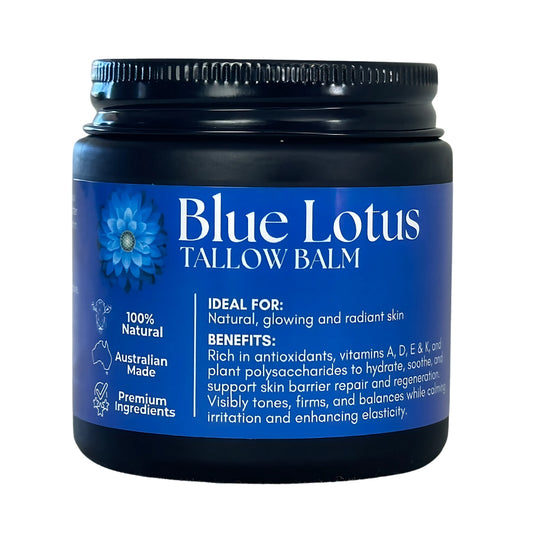
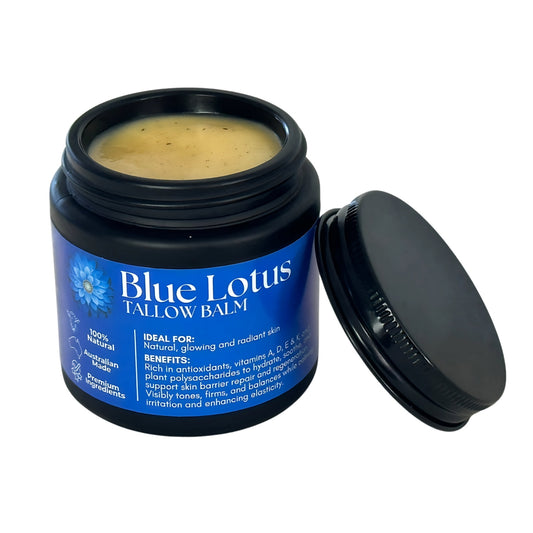
Here's what's worth understanding. A genuinely simple, oil-based formulation doesn't need emulsifiers at all, because there's no water to bind. This is one of the quiet advantages of a tallow balm. There's no water in it, so there's nothing to emulsify and nothing to preserve against. The presence of emulsifiers on a label isn't a crime, but it does tell you the product is more complex, and more watered-down, than its branding might suggest.
Fragrance (or Parfum)
This is the one I'd want you to pay the most attention to. The word "fragrance" or "parfum" on an ingredient list is a black box. Under international cosmetics rules, fragrance is considered a trade secret, which means a brand can list it as a single word while it actually contains anywhere from a handful to several dozen individual chemical compounds. None of which have to be disclosed.
So when you see "fragrance" near the top of a natural moisturiser's ingredient list, understand that you have no idea what's actually in there. It could be a blend of synthetic aroma chemicals, phthalates used to make scent last longer, or any number of undisclosed additives. If a brand wants you to trust that its product is natural, hiding a significant portion of the formula behind one vague word is a strange way to earn it.
This is why, when we scent our products, we use named essential oils. Lavender essential oil is listed as lavender essential oil. You know exactly what it is and exactly where it came from.
Dimethicone
Dimethicone is a silicone. It's the ingredient responsible for that immediate silky, smooth feeling you get when you rub certain creams into your skin. It works by forming a thin, water-resistant film over the surface.
The catch is that this is an illusion of nourishment, not the real thing. Dimethicone sits on top of the skin rather than feeding it. It can make skin feel soft in the moment while delivering nothing of actual nutritional value to the skin barrier underneath. It's also occlusive, which for some people means trapped debris and congested pores. It's a texture trick, and a good one, but a trick all the same.
One to watch: Tocopheryl Acetate
You'll often see "tocopheryl acetate" listed and assume it's vitamin E. It's a synthetic, stabilised form of vitamin E, manufactured to last longer on a shelf. It's not the same as the naturally occurring vitamin E your skin recognises. For comparison, grass-fed and grass-finished beef tallow contains naturally occurring vitamin E, along with vitamins A, D, and K, in a form that's biocompatible with human skin. Same vitamin name on paper. Very different thing in practice.

How to Actually Read a Skincare Label
Once you know what to look for, reading a label takes about ten seconds. Here are the rules I use, and they work on any product, anywhere.
If you can't pronounce it, look it up. This isn't about avoiding every long word, because some natural ingredients have intimidating botanical names. It's about building the habit of checking. A quick search of any ingredient will tell you whether it's a plant, a mineral, or something synthesised in a lab. Free databases exist specifically for this. Use them until you start recognising the usual suspects on sight.
Shorter lists are almost always better. A product with six ingredients you can identify is almost always a cleaner formulation than one with twenty-six. Complexity on a label usually means fillers, stabilisers, and synthetics doing jobs that a simpler product never needed doing in the first place.
Read the order. Ingredients are listed by concentration, from most to least. This is the single most useful thing on the label. If a brand is shouting about its hero botanical on the front of the jar but that ingredient appears second from last on the back, there's barely a trace of it in there. The first three to five ingredients are the product. Everything after that is often present in tiny amounts.
Be suspicious of umbrella terms. "Fragrance," "parfum," "natural flavour," and vague phrases like "plant-derived complex" are places where undisclosed ingredients hide. A transparent brand names things. If a product won't tell you what's in its scent, ask yourself what else it isn't telling you.

What a Genuinely Natural Ingredient List Looks Like
Here's the contrast, and I'll keep it brief because the point makes itself.
Most of our products at Pachamama Medicina contain between four and eight ingredients, and every single one can be named in plain language. Grass-fed and grass-finished beef tallow. Calendula. Yarrow. Jojoba oil. Beeswax. Things you could picture, source, or grow. Nothing hiding behind a trade secret, nothing you'd need a chemistry degree to decode.
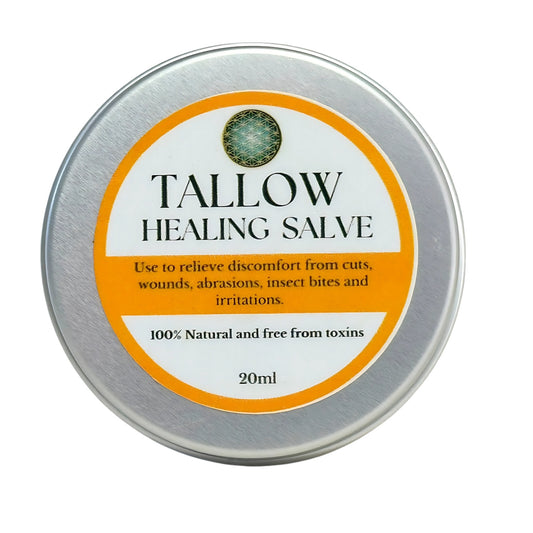
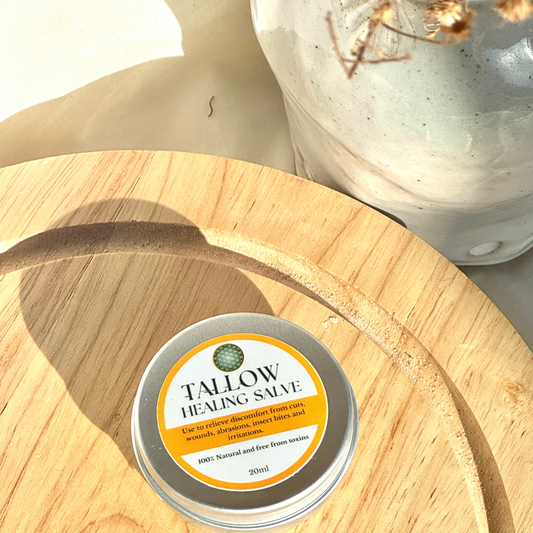
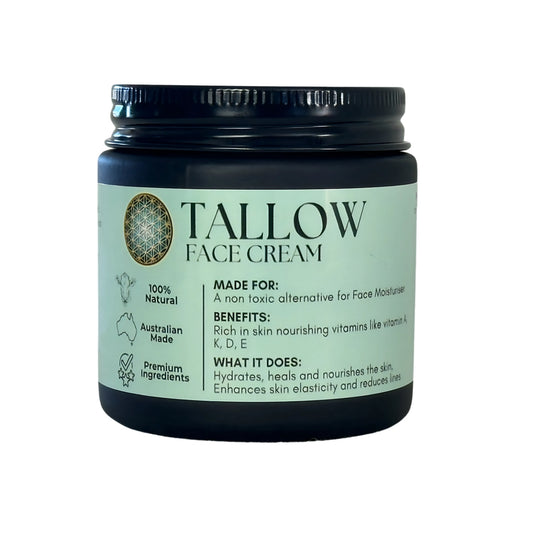
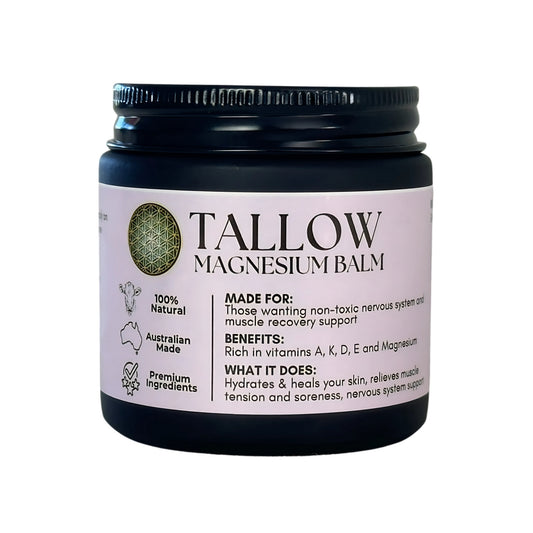
Tallow is the foundation of most of what we make, and there's a good reason for that. It's remarkably biocompatible with human skin, because its fatty acid profile closely resembles the natural oils our own skin produces. That means skin tends to recognise it and absorb it rather than letting it sit on the surface. Grass-fed and grass-finished tallow is also naturally rich in the fat-soluble vitamins A, D, E, and K, which are the real, naturally occurring versions, not the synthetic stand-ins.
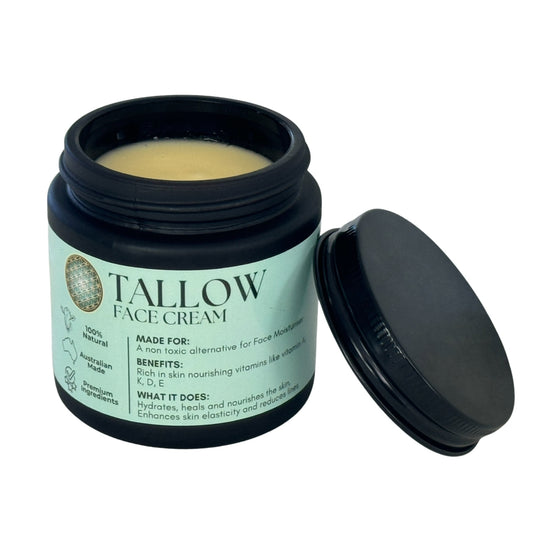
Our Tallow Botanica Face Balm is a good example. You can read every ingredient and know exactly what each one is and what it's doing. That's the whole idea.
I'm not telling you this to sell you a jar. I'm telling you because once you've seen what a five-ingredient list looks like, the twenty-six ingredient version is hard to justify. If you want the longer story of why we started doing this in the first place, it's on our Our Story page.

Go Check Your Bathroom Shelf
I'm not going to tell you to throw everything out. That's wasteful, and it's not the point. The point is that you now know how to look.
Go and flip over the products you already own. Read the first five ingredients. Count how many you can actually name. Notice where the "hero" botanical sits on the list. See if "fragrance" is hiding in there.
You don't have to become obsessive about it. You just have to start reading with new eyes. Because here's the thing about learning to read a label properly. Once you know what to look for, you can't unsee it. And the next time a jar tells you it's natural, you'll know exactly how to check whether it's telling the truth.
Frequently Asked Questions
Is "natural" skincare regulated in Australia?
No. There is no legal or regulated definition of the word "natural" in Australian cosmetics. Any brand can use it on any product regardless of the ingredients inside. The ingredient list itself is regulated and must be accurate, but the marketing term "natural" is not. The same applies to "clean," "pure," and "non-toxic."
What does "clean beauty" actually mean?
In practical terms, nothing standardised. "Clean beauty" is a marketing term with no regulated definition in Australia, so it varies entirely from brand to brand. Some brands use it sincerely, others loosely. The only reliable way to assess a product is to read the full ingredient list rather than trusting the term itself.
How do I know if a product is truly natural?
Read the ingredient list, not the front of the packaging. Look for short lists of recognisable ingredients, named botanicals rather than umbrella terms like "fragrance," and ingredients you can identify as plants, minerals, or whole-food fats. Remember that ingredients are listed by concentration, so the first few items make up most of the product.
What is tallow skincare and why is it considered natural?
Tallow skincare is made from rendered beef fat, ideally from grass-fed and grass-finished cattle. It's considered natural because it's a whole, minimally processed ingredient that is biocompatible with human skin, meaning its fatty acid profile is similar to the oils human skin produces. Grass-fed tallow naturally contains vitamins A, D, E, and K. Because tallow balms contain no water, they don't require synthetic emulsifiers or preservatives.
Are preservatives in skincare always bad?
No. Preservatives serve a genuine purpose: any product containing water needs one to prevent bacteria and mould from growing. The more useful question is whether the product needs water at all. Anhydrous, oil-based formulations like tallow balms contain no water, so they don't require added preservatives in the first place. A preservative isn't inherently bad. It's a signal that the product is water-based and worth looking at more closely.